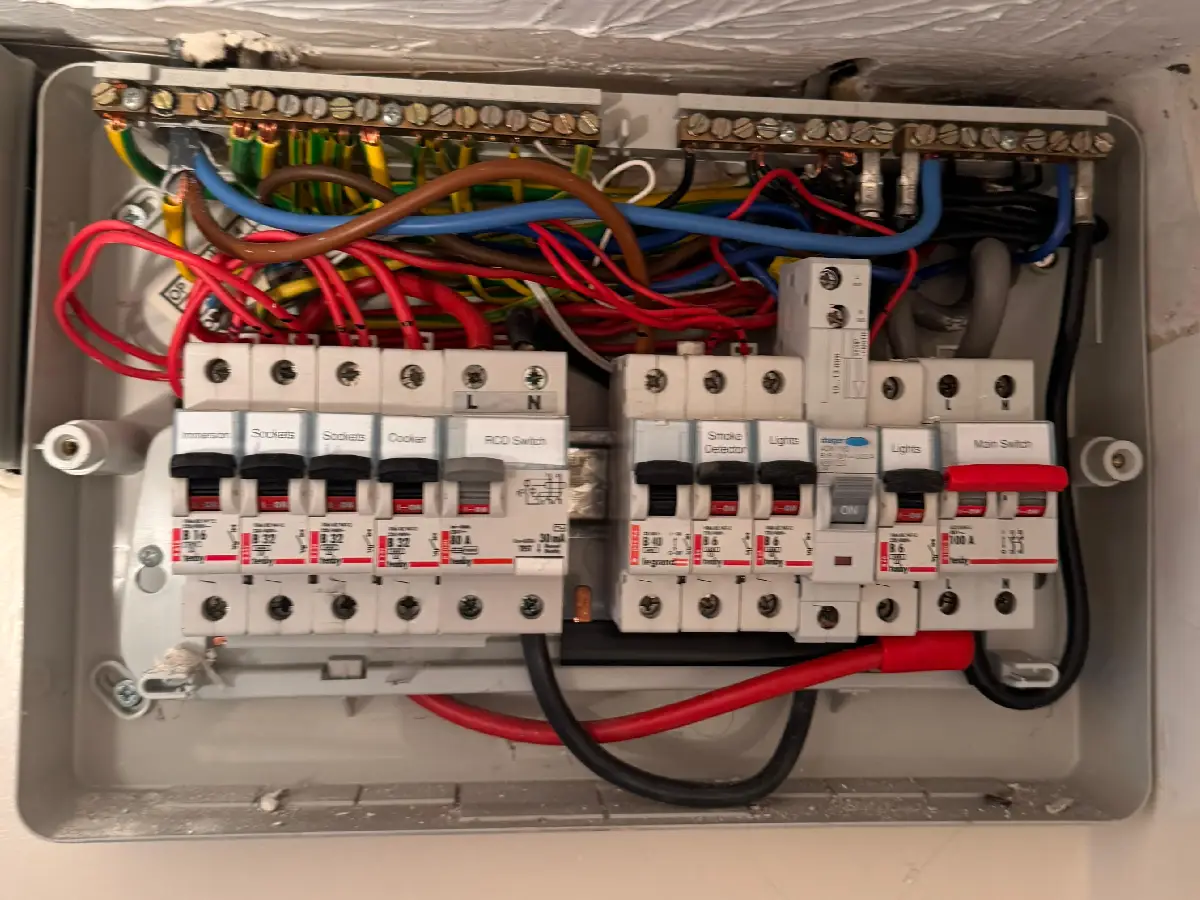
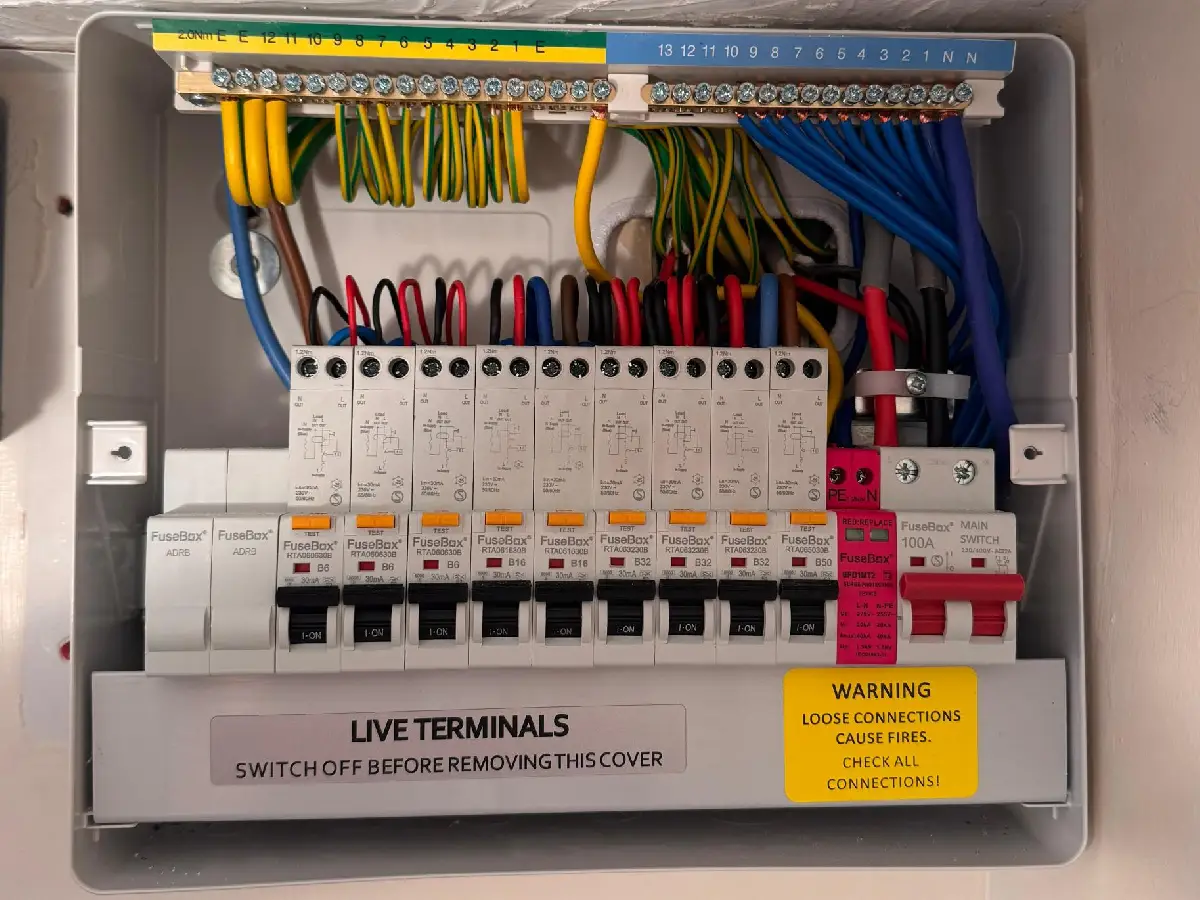
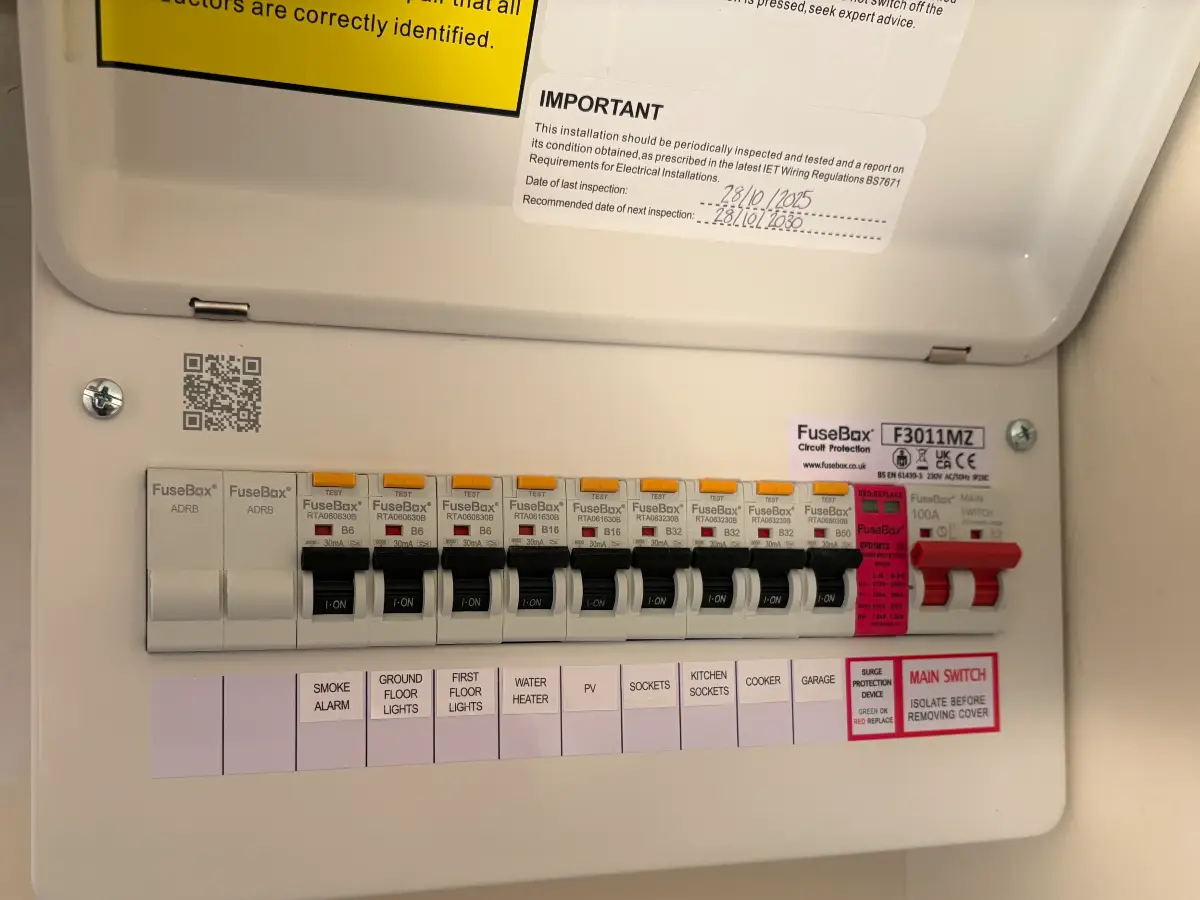
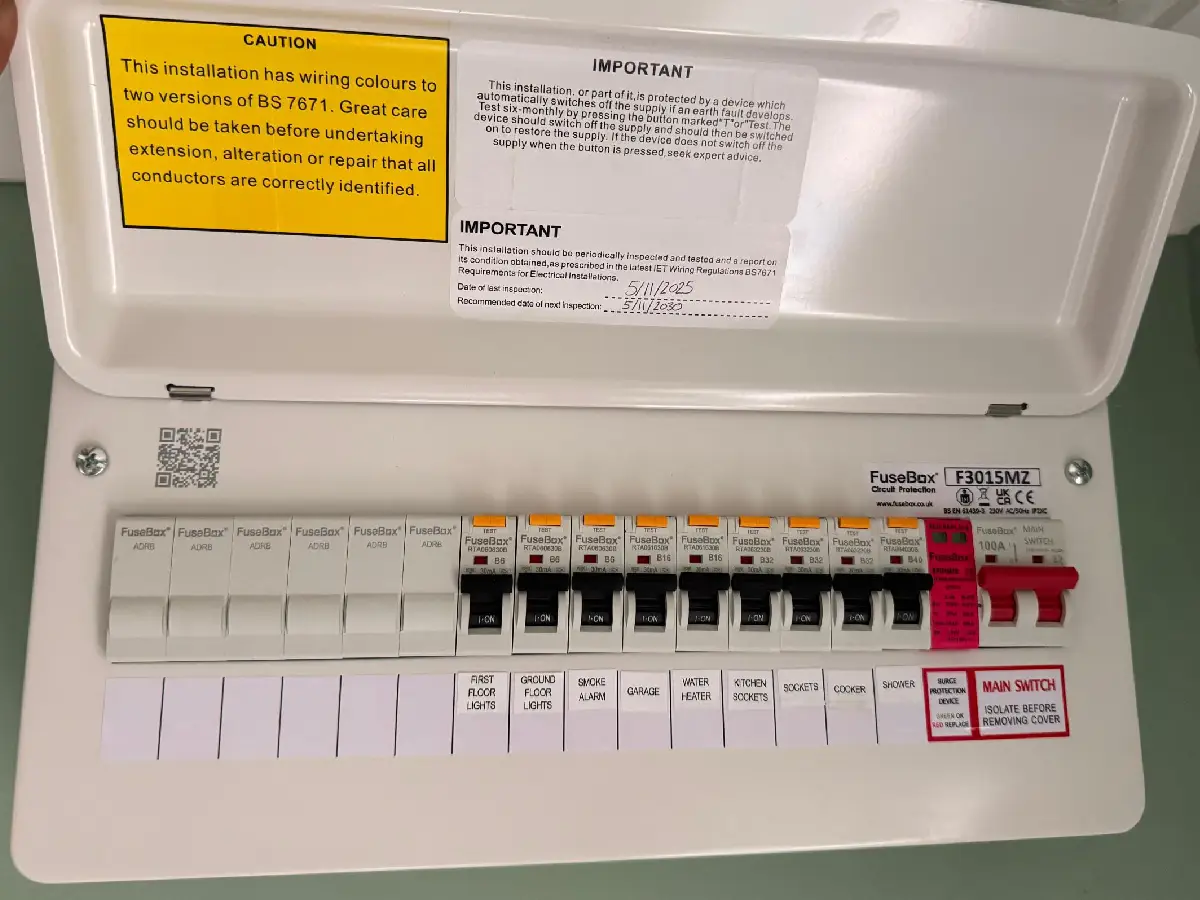
Neatly-installed cables prevent undue strain on conductors
Metal case for fire safety
Earth Bar
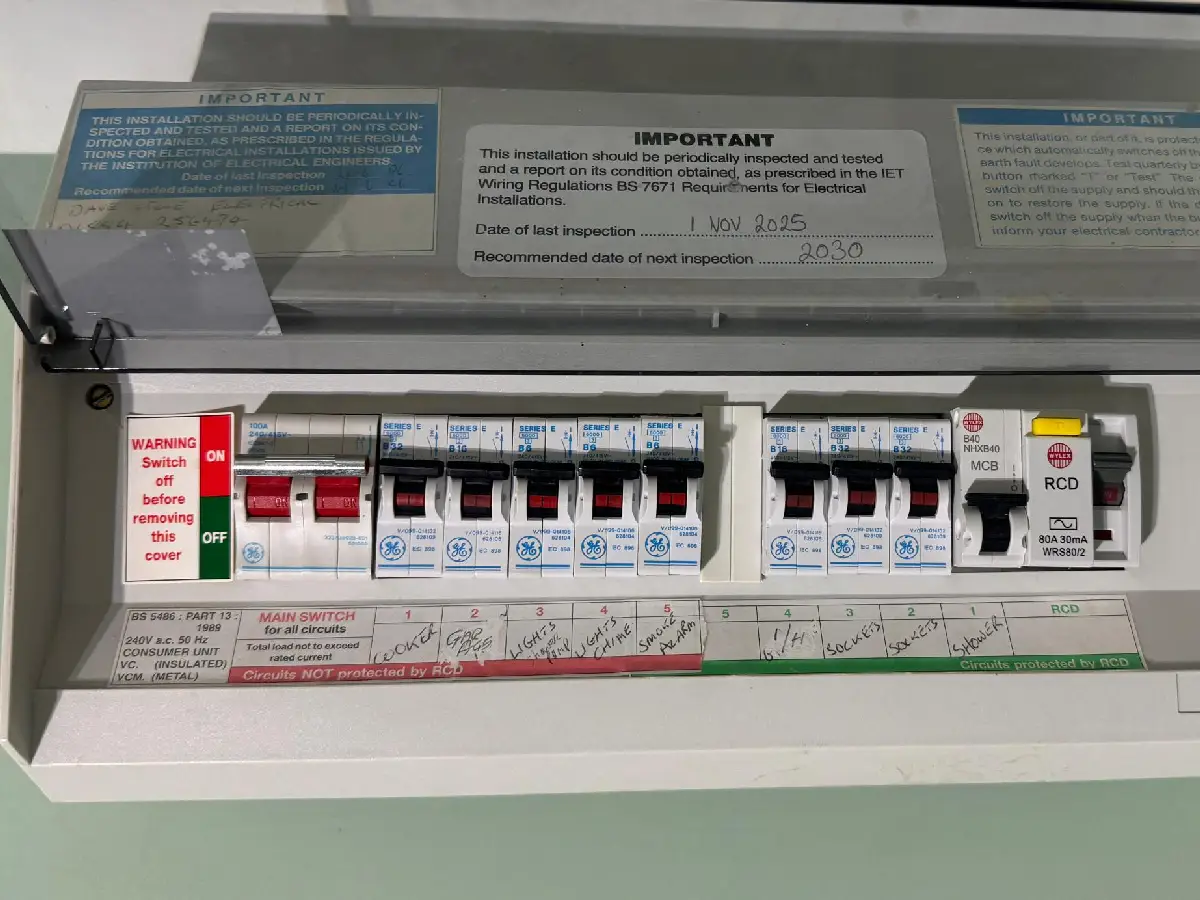
RCBO Circuit Breakers offer greater protection
Surge Protection Device






Nick Poel
3 weeks ago
We have worked alongside Paul on a number of solar PV and battery storage installations, and they are brilliant to work with. They are consistently reliable, well-organised, and bring an impressive level of Fox inverter and battery knowledge to every project. What really sets them apart is their aftercare and problem-solving—if any technical issues or faults crop up, they deal with the customers excellently and stay until it’s fully sorted rather than walking away. Fantastic communication throughout. Highly recommend them for local solar and battery work!

Kirk Bexley
3 weeks ago
Excellent service, professional tradesmen, helpful manner,

Steve
3 weeks ago
Excellent service for some work carried out at our business ,fast friendly and a good job done at a good price
Will be using again when I'm in need for some electrical work
Will be using again when I'm in need for some electrical work

Jenny Ponsonby
3 weeks ago
PD Electricial organised one of their electricians to come out at very short notice on a Saturday to fix the lights in our holiday let. They were very efficient, explained the problem very clearly and fixed the issue. Would highly recommend!

Guy Burt
3 weeks ago
Great service and work done-turned up on time, great communication all the way through the process….did a change of fuse and circuit box-all very neat and tidy-good workmanship-would highly recommend

Jamie and Jenny Sweeting
3 weeks ago
Got PD electrical to fit a couple of video doorbells. Really happy with the work. They did a great job fitting the doorbells and kept me informed throughout the whole process, explaining everything clearly and providing all the information I needed - it was all a bit more complicated then it should have been due to the eccentricities of the house. Reliable, professional and would definitely recommend them.

Simon Baskcomb
2 months ago
Prompt response for the whole experience, quote to completion and communications. Clear and complete job quote of tasks and costs. Punctual arrival, professional throughout and left tidy! Job very well done, would not hesitate to return if/when needed.

Richard Borg
3 months ago
Excellent service from start to finish. we are extremely pleased with the work carried out by P. D. Electrical. From the initial contact to the completion of the job, their communication was excellent. the electrician turned up on exactly on time, was incredibly courteous, and worked efficiently to get the job done. The quality of workmanship is top-tie, and he made sure to tidy up completely before leaving. A reliable and professional company. We would use them again and highly recommend their services. Anna and Richard

Fiona Eckford
4 months ago
Paul was extremely helpful when we were trying to choose which EV charger to purchase - his explanations re use of our solar panels v the grid were very clear and made me finally understand how chargers work with panels. He always answered e mails/ texts quickly and is an absolute mine of information!
Ryan who fitted the charger was also really helpful and thorough. Thankyou both
Ryan who fitted the charger was also really helpful and thorough. Thankyou both

Anna Greenwood
4 months ago
Paul and his team were amazing and very quick to get what we needed installed. We will definitely be using them again. They were reliable, helpful, friendly and professional.

Barry
4 months ago
Paul has done a safety inspection and also fitted a new oven.
He is professional and on time and we will definitely be using him again.
He is professional and on time and we will definitely be using him again.

Phil G
5 months ago
Paul, ably assisted by Callum, installed a cooker hood and ducting. This involved core drilling through thick walls. They protected the kitchen from dust, worked carefully and precisely, cleaned up afterwards and did an excellent job all round. I was kept informed at all stages of the job from quotation to completion and he was always punctual. No complaints.

Josie Oakden
5 months ago
Paul, Kenny and Ryan did a fantastic job. Very thorough and professional.
Really pleased with the results, and tidied and cleaned up after themselves. We'll definitely be using them again.
Really pleased with the results, and tidied and cleaned up after themselves. We'll definitely be using them again.

James H
7 months ago
Paul and his team are really reliable and just do a great job. Excellent communication and keep you in touch throughout the work. Can't recommend them highly enough.

Paul Sammut
8 months ago
Very easy to deal with and reliable - everything happened as promised and on the time and date agreed.
Really happy to recommend Paul's services 100%
Really happy to recommend Paul's services 100%

Dave Young
8 months ago
Had to have a cooker wired in ,Paul done a great job and also done a few quick little jobs that needed doing,came back a few days later and supplied and fitted a new heater/radiator, brilliant service

Zoë Browning
10 months ago
Our old fusebox needed replacing and bringing up to modern standards as we had new rooms added and growing needs in the household. We also wanted a way to completely shut down non-essential electrical circuits overnight, saving energy and reducing the amount of electrical interference as we sleep. Paul and the PD Electrical team listened carefully and provided a great solution – a “kill switch” that could give a late-night closedown, whilst keeping essential circuits separated and active overnight.

Artemis Anderson
12 months ago
From the very first call with Paul at PD Electrical right through to the job being finished, the service was excellent. He was friendly, clear, and took the time to explain everything in detail so I fully understood what was needed. No question was too much trouble, and he gave straightforward, confident answers every step of the way. The work itself was carried out with great care and professionalism, and he highlighted a few potential issues that may need attention in the future, even providing a prompt and fair quote for those.
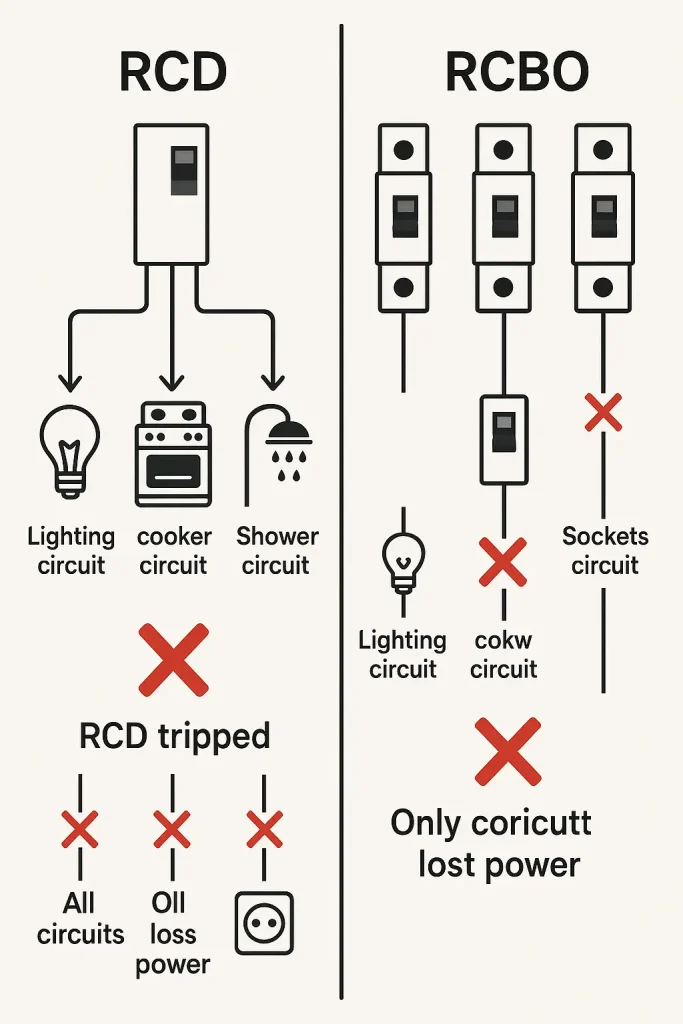
Paul’s knowledge and expertise really stood out, which gave me complete confidence in the work being done. My main problem was the fuse box constantly tripping and cutting power to several circuits at once. Paul recommended upgrading to a modern RCBO consumer unit, which has been the perfect solution — now each circuit is individually protected. This has made a huge difference, especially as I work from home and can’t afford interruptions to my computer equipment.
The new setup gives me real peace of mind knowing everything is up to date, safe, and reliable. I hadn’t even heard of an RCBO before, but now I wouldn’t want to be without one. I’d happily use PD Electrical again and highly recommend Paul for anyone needing a trustworthy, knowledgeable electrician.
Paul’s knowledge and expertise really stood out, which gave me complete confidence in the work being done. My main problem was the fuse box constantly tripping and cutting power to several circuits at once. Paul recommended upgrading to a modern RCBO consumer unit, which has been the perfect solution — now each circuit is individually protected. This has made a huge difference, especially as I work from home and can’t afford interruptions to my computer equipment.
The new setup gives me real peace of mind knowing everything is up to date, safe, and reliable. I hadn’t even heard of an RCBO before, but now I wouldn’t want to be without one. I’d happily use PD Electrical again and highly recommend Paul for anyone needing a trustworthy, knowledgeable electrician.

Chris Penman
12 months ago
I had issues with my fuse-box tripping and was losing about 8 circuits every time, I got Paul round and he advised on a new RCBO consumer unit, which turned out to be the perfect solutions as we now have individual circuit protection. I work from home on the computer a lot and to been having power interruption is just no good for my business. I now have peace of mind knowing its all upgrading, updated and protected. I didn't have a clue what an RCBO was but I now know its a MUST have.

Sarah Hadfield
1 year ago
I was initially a bit suspicious about all these amazing reviews but decided to get in touch. Within 6 days the work had been completed to an excellent standard. Really good communication throughout, can't recommend Paul and his team enough. Thank you!

Chas D
1 year ago
After waiting six weeks for an engineer to turn up from Ohme or Octopus to fit an EV Charger, I decided to try a local company.
Paul came on the afternoon of my call , and provided me with an estimate for installing a EV Charger and upgrading my Electric fuse box. Four days later Charlie & Ryan attended and completed both jobs. The quality of their work was first class, and at a better price than my previous estimates!
An excellent company I strongly recommend!
Paul came on the afternoon of my call , and provided me with an estimate for installing a EV Charger and upgrading my Electric fuse box. Four days later Charlie & Ryan attended and completed both jobs. The quality of their work was first class, and at a better price than my previous estimates!
An excellent company I strongly recommend!

Monica van Lienden
1 year ago
PD Electrical went above and beyond to replace a light fitting for my elderly, hard of hearing Mother. They were very patient with her and did a great job at a good price. I would highly recommend.

Peter Madge
1 year ago
Excellent standard of work, a very professional and efficient team. Arrived on time and got straight on with the job. Will definitely be using PD Electrical again.

David Le Page
1 year ago
Paul and his team were very efficient and reliable. They resolve our issue quickly and communication was smooth and transparent. They were also very nice, polite and left everything tidy and neat.

dee henrichs
1 year ago
The PD Electric guys arrived promptly and did an excellent job. They were very careful in protecting our new countertop and handled our huge dome lights the same way. They efficiently converted the lights to LED and reinstalled with precision and care. They also advised us with patience and kindness on other jobs we are planning. Highly recommend PD Electric.

Donna Parrott
1 year ago
Excellent service from quote to completion. Very reliable, and hard working. Would highly recommend Paul and his Team.

James Coleman
1 year ago
Paul connected my new oven and hob to the electrical supply. He arrived promptly and completed the required work quickly and cleanly. Excellent work and good value. I would highly recommend PD Electrical.

Ian Jarmarkier
1 year ago
Paul tested all of the portable appliance at my cookery school. Very quick and thorough, good value, and a nice chap too!

Michael and Sarah Taffinder
1 year ago
We were much relieved when we had a complete power failure and on sending an SOS to Paul, Ken appeared on our doorstep in no time. He sorted our problem out so quickly and efficiently - he noticed other electrical shortcomings and was charming company. Altogether a pleasant experience and at a good price. I strongly recommend dependable P D Electrical.

Pippa Bassett
1 year ago
You'll have no worries engaging with PD Electrical. The service was second to none, we were kept up to date with the work and it was all completed on time and on budget. Nothing was too much trouble for these guys. Would highly recommend...

Emma Hyman
2 years ago
Had Paul come out to my home and fit a new cooker for me he was polite and extremely helpful and even disposed of the packaging for my new item was very happy with the service I recieved, was a very reasonable price aswell. Would highly recommend to anyone wanting any electric works. 😀

Maria Le Mesurier
2 years ago
Paul is an extremely reliable electrician who has done a lot of different electrical work for us at home both interior and exterior. The team of guys he has working for him are equally as good. They work efficiently and importantly to me, are tidy and always respectful of our home. I cannot recommend Paul Dunn Electric more highly.

Anita Simmonds
2 years ago
I have used Paul a few times and also recommended him to others. I have always found his service excellent and will definitely be using again. On this occasion I wanted my meter to be moved to a more appropriate place. Paul arranged an appointment quickly with me to discuss the work and sent through the quote stating what had been discussed. The work was planned in swiftly and the engineer was on time, friendly and efficient. The engineer carried out all necessary work to a high standard and left the area clean and tidy. The documentation required for the work was sent promptly. Thank you so much for the service provided.

Paula Newbery
2 years ago
I can't praise Paul Dunn and his team highly enough. We needed a lot of work done to comply with new electrical regulations. Paul came to assess the job the day after we enquired, sent a quote the day after that and started the work within a week.
Very different from a previous experience with an electrician - long wait to get the job done and not done efficiently.
Paul and his team did everything perfectly. We will use him in future for any electrical jobs.
Very different from a previous experience with an electrician - long wait to get the job done and not done efficiently.
Paul and his team did everything perfectly. We will use him in future for any electrical jobs.

Michaela Henderson
2 years ago
I have used Paul and his team twice now and couldn’t recommend them enough! They go above and beyond at all times and nothing is too much. Their customer service is impeccable and you feel they really value your custom. It’s very rare to find such amazing service. I wouldn’t go anywhere else and recommend to everyone I know! Thank you PD team 🙂

Paul Halling
2 years ago
Outstanding service following a recommendation. Paul moved my ev charger from my address to my new address. He gave me confirmed date and times and stuck to them. His communication was excellent. Furthermore, having just moved we needed new light fittings and Paul kindly carried out the work the same day instead of leaving us without the new fittings.
I would without reservation highly recommended him.
I would without reservation highly recommended him.

Tim & Sue
2 years ago
Paul and Charlie from PC Electrical (Ilfracombe) have just fitted a battery storage unit to connect to our previously fitted solar panels. Paul has been excellent throughout the job assessment, quote and completion of the supply and fitting. Paul's communication skills are exceptional and he backs this up with skilled and very tidy work at exactly the time & day he promises, together with patient & reliable availability after the fitting, leaving us confident of dependable service in the future. We would certainly recommend this business.
Review edit January 2025- having had occasion to rely on Paul's after sales services I agree with his claims for customer care and reliability, Paul can be totally trusted to deliver as promised.
Review edit January 2025- having had occasion to rely on Paul's after sales services I agree with his claims for customer care and reliability, Paul can be totally trusted to deliver as promised.

Stuart Saint
2 years ago
What a wonderful experience having an electrician with a"nothing is too much trouble" attitude. Paul came on time completed the job even though delays forced him to return a number times ( not his fault). Polite, tidy would recommend him without questions.

Simon Frankum
2 years ago
After loosing power at 11pm on Saturday evening Paul of PD electrical was one of the only electricians to answer my call and attended within the hour, found the fault and got my plugs and lights back on that night. He then returned Monday morning as agreed to replace the faulty cable that had caused the original problem. Reasonably priced, very friendly and most importantly very reliable. Would definitely recommend.

Lennard Hill
2 years ago
Refreshing, turned up when he said he would & did the job when he said he would. Changed a light on a holiday let for me - Job well done. Definitely use again!

Greg Skinner
2 years ago
The biggest problem in North Devon is finding reliable tradespeople. Paul Dunn of PD Electrical does exactly what he says he’s going to do. Arrives on time, quotes for the job (no estimate or day rate nonsense), then sends a professional colleague to do the job to a very high standard. This is what I said to Paul…..’We’re delighted we are with what Ken has done for us. He's thorough, professional, extremely knowledgeable and tidy plus he's spends time explaining what he's done and how he's done it. He's very conscientious and wants to get the job done 100% correctly. On top of all that he's a total gentleman and a credit to your reputation. Thank you again. Greg.’

Charlie Hutton
2 years ago
Paul came to our house yesterday and was great from the start. Turned up on time, dust sheets down, protective plastic down and a job successfully completed with all holes patched and primed like new. Best electrician we’ve ever had to the house, highly recommended.

Beverley Gumm
2 years ago
Needed an electrician for a tripping switch called pd electrical came next day at the time agreed job sorted
Had a quote for another job was booked in on a day and time that worked for us
Pd electrical turned up done the job very professional everything was left clean and tidy rubbish taken away
PD ELECTRICAL highly recommended
Had a quote for another job was booked in on a day and time that worked for us
Pd electrical turned up done the job very professional everything was left clean and tidy rubbish taken away
PD ELECTRICAL highly recommended

Leigh nellthorp
2 years ago
Paul has been our electrician since 2017. He responds quickly whenever we need help with large or small jobs and maintenance like today. PD Electrical have also assisted us down the years with a complete house renovation and rewire, overcoming challenges along the way. Furthermore, Paul also worked hard to provide my elderly parents with a wet room and other adaptations for their home. He and his team are always friendly, competent and reliable, which is very much appreciated. Many thanks again Paul.

Sophie Turner
3 years ago
I needed a tiny job doing fast - ceiling light. P D Electrical booked a great appointment time with me, turned up on time and carried the work out perfectly. Very happy with all the work they've done for me so far. 2 jobs and counting! See you all soon!

Joanne Lawrence
3 years ago
My previous experiences of getting the service I needed had been difficult and took a long time to get responses. Paul responded immediately and got the work done in record time. It was a refreshing change to deal with such a friendly and efficient company. I was really happy with the end result and have no hesitation in recommending PD Electrical to anyone needing a professional service that is fast and efficient.

Valerie Fama
3 years ago
Having been let down by other electricians who either didn't respond or were apparently too busy, I was very impressed with Paul's responses to requests for quotes. He isn't cheap but you definitely get what you pay for. He's installed a cooker hood, a replacement bathroom extractor fan and redirected its exit to a more efficient location, separated a light and extractor fan in an en suite, and installed a replacement electric doorbell. He leaves everything clean and tidy. I'm really pleased with Paul's standard of work.

Jamie C
3 years ago
Great tradesmen. Turned up when agreed and completed work as agreed. Good experience.

Sheila Blogg
3 years ago
Excellent service. Thoughtful solutions to my problem. One lowered modern fuse board with emergency lighting.

Kevin Browning
3 years ago
I chose PD Electrical purely on the strength of their Google Reviews. I have had various electricians over the years, but this time wanted someone with stellar reputation. Paul called round for a chat and to assess the requirement. It was only a few switches and lights, but he took time to document what was needed and also ask a few other questions to help him understand the setup in my home. I then received a quote for the work, which was reasonable and accompanied by a very thorough, helpful guides to how PD work and key things I should know. Paul had also left a book of client testimonials which was a very nice touch, something I had never seen before.
Charlie from PD arrived on time to carry out the work, he was polite, cheerful and a pleasure to have in the house (this has not always been the case with previous contractors!) Everything was completed to agreed spec and care was taken throughout not to leave any mess or cause disruption. I chatted with Paul about our fusebox and some other requirements and he gave me considered, helpful responses which encouraged me to return in future for additional works.
My day job involves encouraging my clients to "go the extra mile" for their customers and it was great to see this in action with Paul. Highly recommended, well done!
Charlie from PD arrived on time to carry out the work, he was polite, cheerful and a pleasure to have in the house (this has not always been the case with previous contractors!) Everything was completed to agreed spec and care was taken throughout not to leave any mess or cause disruption. I chatted with Paul about our fusebox and some other requirements and he gave me considered, helpful responses which encouraged me to return in future for additional works.
My day job involves encouraging my clients to "go the extra mile" for their customers and it was great to see this in action with Paul. Highly recommended, well done!

Vicky Bishop
3 years ago
Paul came out promptly to quote and returned within the next few days to fit several challenging light fittings, nothing was too much trouble. He was on time, helpful and polite, and got the job done efficiently. Would highly recommend.